
Plateaus & weight loss – a few thoughts
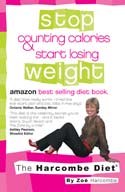
This is a new section in the latest edition of “Stop Counting Calories”. I hope it helps share some of the learnings that clients and I have had working together since the first edition was published:
1) The incredible weight loss, which many people achieve in Phase 1, is not sustainable. Much as I would love for you to lose several pounds every week, week in week out, it is extremely unlikely to happen. Candida and Food Intolerance cause significant water retention and, if you lose over half a stone in five days (as regularly happens), much of this will be water and this can only be lost once. As long as you keep these two particular conditions under control, there is no reason for this water to return, and this weight loss really does count – you can drop a clothes size, or even two, in a matter of days and look and feel so much better.
2) On the subject of water vs. fat loss, weight is weight. The human body is approximately 50% water, so you are always going to lose water as you lose weight. So long as you don’t lose water in an unnatural way, with diuretics, if you are normally hydrated and you weigh less than last week, you have lost weight and you will feel and look slimmer.
3) There is no formula on earth when it comes to weight loss. The “to lose 1lb of fat…” formula in Chapter 2 absolutely does not work (ask the next person who says this to you where it comes from and what the evidence for it is – they won’t be able to tell you). If you had found something that gave you sustained 2lb a week weight loss, you would have lost 104lbs in the past year (and the year before and the year before that) and you wouldn’t be reading this book. I’m really sorry if I am the one breaking this to you, but there is no formula.
Hence, sadly, I genuinely cannot predict what your weight loss will be on The Harcombe Diet. I can share with you numerous testimonials from people who have lost a great deal of weight and kept it off. Many come to say that the weight loss is almost a bonus – what they love even more is the freedom from food addiction and cravings and the incredible energy and wellbeing that they have.
I can share that people comment time and time again that a pound lost on this diet is gone for good – because you have not slowed your metabolism, there is no tendency for you to put on weight the minute you start eating ‘normally’, as happens on other diets. Your whole concept of normal eating will become a lifelong commitment to nourishing your body with real food and cheating when you want to and getting away with it.
Check out Facebook, Amazon and YouTube for comments about the diet. You will find lots of inspiring stories of people who have lost stones and are wearing their target size jeans for the first time in years. Posting such as “Bought the book, it’s a super read, I have lost 2 stone 2lbs in 5 weeks” (YouTube) make my day! Follow the rules and you will lose weight and you will keep it off. However, no one on earth can tell you how quickly you will reach your natural weight.
4) Phase 1 vs. Phase 2 is up to you. Phase 1 is the fastest weight loss plan I have come across, but Phase 2 delivers better on the practical and enjoyable characteristics of a diet. There is a trade off between faster weight loss with a more restricted plan and steadier weight loss and a more varied plan – the choice is yours and you can flex between the two from week to week, to suit your lifestyle. If you want to stay on Phase 1 for longer and find it OK for your lifestyle – do so.
5) If you did well on Phase 1 and then don’t lose any weight for more than a couple of weeks in Phase 2, this can pretty much only be due to something you have re-introduced in Phase 2. You need to be quite analytical and look at everything you have added back in and see if you have added in anything that could have started to ‘feed’ one of the conditions. Wheat would be my first suspect. I have yet to meet someone who does not feel better and lose weight faster staying off wheat until at least close to their goal weight. Things that ‘feed’ Candida and Hypoglycaemia are the next suspects – fruit, whole grains – any substantial increase in carbohydrates into your diet can have an impact if you are very carb sensitive. Re-read Chapter 7 on Phase 2 and follow the advice for the three conditions really carefully to make Phase 2 work for you.
6) Plateaus – because there is no formula that can predict weight loss, there is no way of knowing how much will be lost each week. Some people do find that they plateau – even for a few weeks (this is rare), but then they suddenly start losing steadily again and a month later almost another stone has gone. Plateaus are so frustrating and my heart really does go out to people who are sticking so well to the diet and who don’t get the reward that week – but the reward does come. We just can’t predict when – boy do I wish I could. I know I can take away cravings and I know that Phase 1 works for everyone who has tried it. I just can’t guarantee you will lose weight every single week, week in week out.
Consider this, though: the majority of my success stories have been doing calorie controlled diets for at least 10 years and they had reached the point where they had stopped losing a single pound, despite trying to survive on 1000-1200 calories a day. They try Phase 1, lose 5-10lbs in a week and never look back. You will get there and you will be eating really healthily in the meantime and will no longer be hungry and exhausted.
7) I have developed a theory, working with clients, that weight loss is as much about overcoming fat storage as it is about encouraging fat burning. I really believe that the bodies of long term calorie counters are trained to store fat and we need to re-train the body to stop storing fat. The best way I have found for doing this is to have clients eat three substantial and nourishing meals a day and to eat these as regularly as possible. The body then knows when the next fuel is coming and quickly learns that it doesn’t need to store fat any more. I am really pleasantly surprised how quickly the human body responds positively to healthy eating and how rapidly it starts to work with you.
To accompany this principle, I cannot recommend strongly enough (I do repeat this so often in the book) – limit snacking and avoid snacks altogether if at all possible. If you really are hungry between meals try to eat more at meals, so you are not hungry and/or stick to carb free snacks if possible. Whenever you eat a carbohydrate, the body goes into a glucose/insulin/fat storing environment and you want it to be in a fat burning environment, to use up your love handles. The less often you eat carbs, during the day, the better. Carbs and insulin really are the secret to weight loss.
Is The Harcombe Diet OK for someone with high cholesterol?
Q) Is the Harcombe Diet OK for someone with high cholesterol?
A) Wow – there is almost a book’s worth to answer this question – I’ll try to give the headlines:
0) There’s a point before even getting to point (1), which is that we don’t actually have cholesterol freely floating around in our blood. Hence it is not even strictly accurate to say we have a blood cholesterol level! Cholesterol is not water soluble, so it is carried round the body to do its many functions in things called lipoproteins. We measure these as Low Density Lipoproteins (LDL) and High Density Lipoproteins (HDL). LDL is called bad cholesterol – it is not. It should more accurately be called the carrier of fresh cholesterol, as LDL particles transport fresh cholesterol from the liver out to the parts of the body. HDL is called good cholesterol – it is not. It should more accurately be called the carrier of recycled cholesterol, as HDL particles transport residual cholesterol back to the liver to be recycled.
1) Cholesterol is a vital substance in the human body – so much so that it is actually made by the body (in the liver). Every cell needs cholesterol to survive and repair itself. Our muscles need cholesterol, our sexual functioning requires cholesterol and so on. This is why some of the side effects of statins (drugs designed to mess up the body’s own process by which it makes cholesterol) are muscle fatigue (and even wasting) and sexual problems. I would not allow any doctor to try to lower my body’s natural production of cholesterol for any reason – that’s my personal position – each of you need to have your own, but do your own reading and research to come to your own opinion. Don’t just take the view of your GP – or at least ask them if they receive any funds for performing your cholesterol test (they do – from the government of all places) and see if they or the surgery receive any funding or perks from pharmaceutical companies that make statins.
2) I do not believe that we even have a consistent and reasonable definition of “high cholesterol”. Doctors used to only even look at cholesterol levels in excess of 7, then it became 6 and now 5 is deemed the magic number beyond which everyone shall be put on statins and told to eat man-made, likely hydrogenated margarine. There is no science behind the number 5 – it has been driven down by pressure from pharmaceutical companies over the years. They would happily have the number at 4 – at which level almost everyone in the UK would need to be on statins. How can it be that a ‘normal’ reading is one that would require virtually every adult to be taking drugs?
3) I am one of the growing minority who do NOT believe that cholesterol causes heart disease (why on earth would the body make a substance that kills us? This defies everything logical about evolution). Even if you believe that cholesterol does cause heart disease, the next massive assumption is that anything we eat can have any impact on cholesterol. It is widely accepted (but not widely known) that eating cholesterol (in eggs and other animal products) has no impact on a human’s cholesterol levels. Eggs have been exonerated of any crimes they were alleged to have committed but no big announcement was made to tell people this.
4) The next allegation is that eating saturated fat causes cholesterol. The Food Standards Agency have admitted to me in writing that the study to prove this has not actually been done but, from a number of studies of association, it is believed that eating saturated fat causes heart disease. I liken this to – we have observed a number of people in the bath who are also singing, so we will claim that taking a bath causes singing! To jump from association to causation is a school boy error and we have made it time after time with fat, cholesterol and heart disease.
Again – I do not believe that nature would put anything in real food that would kill us. I have no idea what sugar, emulsifiers, artificial sweeteners, hydrogenated margarines, transfats and so on could do to us – I don’t put them in my body, so I don’t take the risk of finding out. (*)
5) The whole body functions better at normal weight. Hence you have are significantly more likely to have ‘normal’ cholesterol, ‘normal’ blood pressure, low risk of Diabetes etc when you are within the normal weight range. The single most important thing you can do for your overall health is to not smoke. The second most important thing is to eat well (real food, not processed food) and to be in the normal weight range.
Given that 98% of calorie controlled diets will fail (Stunkard & Hume 1959) and given what we know from the Minnesota Starvation Experiment, The Harcombe Diet has to be good for someone with ‘high’ cholesterol (whatever that means) because it gives you a high chance of losing weight and maintaining a normal weight. The other diets that will do this (if you can stick to them) are the extremely low carb diets (like Atkins). Interestingly, a study for the 2004 Horizon programme on Atkins found that not only did people lose more weight on Atkins than on low fat/low calorie diets, they demonstrated a 10 fold improvement in cholesterol vs the low fat group! So, this study alone showed that eating fat will neither make you fat nor raise cholesterol – quite the opposite.
I personally think that The Harcombe Diet can only help with your health, weight and body tests. There can be no doubt that humans are better off avoiding processed food – we have simply had no time to evolve to adapt to the massive number of unfamiliar ingredients that go into our body every day, if we eat processed food. You may like to have more carb meals than fat meals (you will lose weight more slowly if you do this) and you may like to have lower fat versions of protein (lean meat, fish etc). If I tell you that the main fat in lard is monounsaturated fat, would you start to realise how much misinformation you have been given and how you shouldn’t worry about ‘fatty meat’?! The only meat you need to avoid is processed Pepperamis and other manufactured horrors.
I have this little factoid that I’ve developed:
“If we have been eating food in the form that nature intended for 24 hours, agriculture (large scale access to carbohydrates) developed four minutes ago and sugar consumption has increased twenty fold in the last five seconds. I wonder which food is more likely to be responsible for obesity, diabetes, or indeed any modern disease…”
(*) I consume no more than 10g of sugar a day in a 85/90% cocoa bar of chocolate. I don’t consume any sweeteners, emulsifiers, transfats, hydrogenated fats etc .
Soluble Fibre – can it help weight loss?
Whilst not a Frequently Asked Question, this is a great question from Helena – one of my friends and fellow researchers:
Q) “I read that many “bad” foods like potatoes, rice, corn, beans, green bananas have quite a lot of starch that passes through your body. It does this after the food is cooked and when the food is cooled because it crystalizes into a structure that cant be absorbed. not only does it do that, but it gets your body to use reserved fat rather than the food for calories.” Do you know anything about this?
A) It’s the soluble fibre bit of starchy foods that passes through effectively undigested and therefore effectively without the calories having been used.
A couple of points here:
1) the amount is tiny. A biochemist and physicist (Feinman & Fine) analysed exactly how the body uses different macro nutrients (carbs, fats, protein) for energy… See more. They looked at a 2,000 calorie diet comprising 55:30:15 proportions of carb:fat:protein and found that this yielded 1,848 calories available for energy. I repeated their calculation (not being able to allow for soluble fibre with maths alone) and found I got to 1859 calories. So perhaps 11 calories in this composition of 2000 calories could have been accounted for with soluble fibre. Far more interesting is that I repeated the calculation for a 10:30:60 high protein diet and the yield drops to 1,725 calories. Hence the difference from NOT eating carbs (in energy used up making fat and protein available as energy) is far more important than trying to eat soluble fibre.
2) We don’t care about calories! They are just fuel. this whole argument is based on the energy in = energy out misapplication of thermodynamics. The key thing is not whether the soluble fibre calories can be used, but that eating carbs will cause the fattening hormone to be released and the body needs insulin to store fat! Hence the carb, digested or not, enables the body to store fat in a way that a pork chop simply can’t.
January 2010 Club Email
Hi all,
Happy New Year! I hope you enjoyed the 12 Days of Christmas eBook, instead of the club newsletter, for December. Here is the most interesting diet news that I’ve come across in the last month and an update on what I’m up to…
Three particularly interesting stories in December, from the world of dieting:
1) I’ve been doing some research on international dietary advice for my next book and the official Australian advice has been quite breathtaking. Just as the number one piece of advice from the UK Food Standards Agency is “Base your meals on starchy foods”, so the Australian key advice is to “eat plenty of cereals (including breads, rice, pasta and noodles), preferably wholegrain.” The wholegrain advice is good, but check out the quantities. An average woman (not pregnant or breastfeeding), aged 19-60 is advised to have:
- 4-9 servings from the cereal group (at the upper limit, that could be 12 slices of bread AND 3 cups of pasta);
- 5 servings of vegetables (can include potatoes and guideline amount is 375g in total);
- 2 servings of fruit (can be fruit juice);
- 2 servings of dairy (e.g. 400g yoghurt);
- 1 serving (65-100g) of lean meat/fish or 1 cup of pulses – so you can have this serving in ‘bean carb’ form also.
- Up to 2 servings of “extra foods” i.e. junk (the UK Eatwell Plate also ‘allows’ 8% of the plate as junk).
I have added up a sample carb and calorie intake (based on choosing pulses not meat and having 2 small potatoes and 3 servings of normal veg – not all spuds) and it came to 480 grams of carbohydrate and over 3000 calories! In a report in June 2008, Australia apparently pipped the USA to become officially “the fattest nation on earth” (the report’s words). I wonder why!
2) Back to London for the second story: Professor Chris Hawkey, of the British Society of Gastroenterology was speaking at the “Gastro 2009″ conference in London. He claimed that promotion of unhealthy foods and diets has fostered over-eating and an obsession with eating only ‘good’ foods. He was set to tell the conference “the problem facing society is not the content of our diet but the quantity we are consuming.”…
So how come UK PLC is eating 600 fewer calories from household food now than we did before the obesity epidemic and the big change is the significant increase (up to 6 fold in some cases) in processed foods consumed and the significant decrease in real food consumed (one fifth of the butter we used to consume for example). Here’s the full blog on “fad diets making the obesity epidemic worse.”
3) Over to North America now: New Year and the end of December signals the end of the ‘festive’ season for many people. New Year is then the traditional diet time for much of the Western World. There is an ‘urban myth’ that North Americans gain an average 5-7lbs during this long celebration period, so, at the end of December, I set out to find out if this is the case.
A group of scientists did a study on this exact topic and I’ve summarised the obesity journal article for you in the following blog on weight gain between thanksgiving and new year. The average turns out to be quite a bit less than 5-7lbs, but some people are definitely gaining this amount.
Quick headlines on what I’m up to:
1) The paperback of “Stop Counting Calories…” is now available in the USA! This was listed on Amazon.com in late December and it has a great new cover – thanks so much to Lewis Kokoc for this. Lewis is the creative behind our new Twitter banner (the same as the new book spine) and the strawberry logo and all sorts – clever guy!
2) We had some lovely “LBD” (Little Black Dress) articles in the UK magazines just before Christmas and had some great coverage in Star magazine, Celebs on Sunday (Sunday Mirror again – they are so good to us) and even The Telegraph (thank you Alice!)
3) I’m getting quite frequent requests from magazines to comment on weird and wonderful diet stories. At the more unusual end of the scale I’ve been asked to comment on whether a Sex Hormone Binding Globulin (which has the unfortunate abbreviation SHBG) provides an explanation for any link between weight and libido (I said more likely we just feel better about ourselves when we’re closer to our natural weight). Then there was the question – has Kate Moss’s weight loss been caused by drinking Black jelly leaf?! I hadn’t noticed she’d gained or lost weight and I didn’t think that we’d be rushing out to get a substance described as “like stale coca-cola with pieces of floating gelatine”. One cheeky (male) web site review suggested it may be a useful aid for bulimics! I’ll let you know if they get any more bizarre!
Continued thanks to all of the wonderful people on Facebook, chatting away to each other and helping each other out in the discussion rooms. If any of you want to join in, we’re on www.facebook.com/theharcombediet and the chat rooms are pretty active!
Thank you so much to those of you who have left book reviews on Amazon – you are so kind and it is much appreciated. If any of you are able to copy your Amazon.co.uk review to Amazon.com (the new cover) I would be so grateful!
All the best – Zoë x
December 2009 Club Email
We did a different update for Christmas – a free eBook based on the 12 Days of Christmas – with 12, 11, 10, 9 etc different aspects of the diet featured to match this well known festive song.
In case you missed it, it is still available in the free stuff part of The Shop.
Phase 1 – no dairy but NLY?
Q) If we avoid dairy products in Phase 1, how is NLY OK?
A) Great Q on the dairy/Natural Live Yoghurt – I can’t believe I haven’t had that one before!
Phase 1 came about by looking at the ‘perfect diets’ for Candida, Food Intolerance and Hypoglycaemia and then trying to design a diet that would be optimal for all 3. The diets were very consistent in some areas and differed in others. (Even the diets for Candida vary – Trowbridge & Walker advise differently to Crook and Chaitow is slightly different again). The compromise I went for, in designing Phase 1, was to allow NLY as it is so beneficial for Candida and there is much evidence (see below) that even people with lactose intolerance don’t have problems with yoghurt. Add to this that I have seen 1 or 2 clients with lactose intolerance and about 99% with wheat intolerance and you decide that NLY is a very low risk. And it adds so much variety and enjoyment to those tough 5 days!
“Yogurt containing live active bacteria is believed to improve lactose digestion for the same reason that probiotics are thought to work. When yogurt is consumed, bile acids disrupt the cell wall of the bacteria in yogurt. This releases the enzyme beta-galactosidase (related to lactase) into the intestines, where it can enhance lactose digestion. Not any yogurt will do. It must contain live active bacteria.
Although yogurt is a milk product, many people with lactose intolerance do not experience symptoms after eating yogurt, even the kind that doesn’t contain live active bacteria.”
The original source for the above extract is here.
Can I have fruit teas in Phase 1?
Q) Can I have fruit teas in Phase 1?
A) Yes – I just group all such things under ‘herbal teas’ – so everything from peppermint to chamomile to rosehip, blackcurrent, raspberry and vanilla – any such teas are absolutely fine in any phase of the diet. They always smell better than they taste I find!
Can I have Tahini?
Q) Can I have Tahini?
A) Tahini is a sesame seed paste. I’ve checked my nutrition composition database and it only lists Tahini in a sesame butter form (it must be butter based, therefore).
It lists 100g of tahini as containing 53g fat and 22g carb (protein is 17g and the rest is water), so it mixes at source, just as nuts and seeds do (makes sense).
Not good even for Phase 2, therefore, but OK as a cheat for Phase 3.
November 2009 Club Email
Hi all,
Here is the most interesting diet news that I’ve come across in the last month and an update on what I’m up to…
Three particularly interesting stories in October, from the world of dieting:
1) The world’s heaviest man is apparently based in the UK, not in the US! This story was all over the national press on 21 October 2009. Paul Mason is 70 stone and has been confined to bed for the past few years. He apparently eats a staggering 20,000 calories a day.
There is only one question that springs to mind whenever I read stories about people who are in excess of 50 stone – who is feeding them?! Every documentary on TV, or article like this in a newspaper, shows the person confined to bed and therefore unable to wander to the newsagent to buy confectionery or to the chip shop to buy chips. If they can’t move sufficiently to get the bad food that is killing them, then someone else is doing this. Feeding a 70 stone person, confined to bed, 20,000 calories a day, has to be assisted suicide or attempted murder or something as serious as that. Here is the Daily Mail article on the worlds heaviest man.
2) Off to the Mediterranean for the second story: if only we all had a dollar or pound for each time we were told the Mediterranean diet will solve every ailment on the planet! Please start reading such articles for the nonsense that they are…
“Eating a Mediterranean diet could cut your risk of depression by 30%” according to researchers. I wonder if anything else could have explained an observed difference in depression? Um, let me think – the climate? All that glorious sunny weather? The stunning scenery, lakes, mountains and coastlines everywhere? The wonderful sense of family and community that Mediterranean countries have? The vastly better work life balance that these populations enjoy? the fact that they don’t have “East Enders” to depress the hell out of them? The fact that the nights are more evenly light all year round (being nearer the equator). (After all, Finland has the darkest nights and the highest suicide rate – I’m sure this is just coincidence – the Finns just need to get some olive oil down them!)
What about even how we eat food – not what we eat? Mediterranean people enjoy long, sit down meals with friends, where they consume wonderfully high amounts of fat (meat, fish, cheese, eggs etc) and drink impressive amounts of red wine and laugh and enjoy time together. I wonder if olive oil is just not the same in a council flat in Hackney, with a tray on your lap, watching Coronation Street and worrying about unemployment?
Please remember how stupid and ludicrous and irresponsible this study and ‘conclusion’ is when you see what looks like a more plausible article about, say, the Mediterranean diet and heart disease. I have seen many articles on the Mediterranean diet and heart disease and they are similarly an assumed association between two variables when at least 100 other variables could and should be taken into account. All of this is bad science and it should be far better regulated than it is. You are as likely to find a link between being an Arsenal or a Newcastle season ticket holder and depression! Here is the Daily Mail article on the Mediterranean diet and depression.
3) Over to America now, the fizzy drinks industry and producers of high-fructose corn syrup may struggle to continue to argue that there is no link between fizzy drink consumption and obesity. Thanks to a new California study, we now have evidence on the drinking and weight connection for 43,000 adults and 4,000 adolescents. That’s a significant study. The conclusion was that the people in the study who were drinking one or more fizzy drink a day were 27% more likely to be obese. 62% of adults who drink at least one soda each day are overweight or obese.
The study also found that Californians are drinking these drinks as never before: At least one soda is consumed daily by 41% of children, 62% of adolescents and 24% of adults. Through the study, another shocking statistic was revealed: The average California teen consumes 39 pounds of liquid sugar each year purely from fizzy drink consumption.
The quite unique problems with fizzy drinks are three fold: 1) obesity journals are consistently showing that the sweeteners in fizzy drinks have much the same effect on the body and insulin as sugar does, so the fact that some can be low calorie makes no difference. 2) we graze on them, so we are constantly waking up the pancreas and asking it to release insulin and Harcombe Diet people will know that insulin has a huge role to play in obesity and 3) the high fructose corn syrup (used far more in the US than the UK) is particularly fattening as we are learning that the fructose molecule gets turned to fat in the liver and the glucose molecule wakes up insulin, enabling that fat to be stored. That’s the simplest summary I can give of a conference I attended called “Fructose the Lipogenic Carbohydrate”!
Quick headlines on what I’m up to:
1) I’ve done a number of postings on www.zoeharcombe.com using me as an experiment for you! I’ve finished weighing myself every day and it did indeed show some very interesting variations during the month. I’ve posted details of what I eat and even my most recent blood test results. All in the name of research!
2) The books are being launched in Australia and NZ next spring, so we have started preparing the PR for down under already. We are really excited about these doing well – especially after recent stats on obesity rates in Australia. NZ seems to be doing much better.
3) We had some great coverage in the UK in October for National Chocolate week! Journalists seem to love the idea that a ‘diet guru’ is recommending chocolate – then they realise just how strong the stuff is that we should be eating! We were in everything from “Glamour” to “My Weekly” to “Healthy Magazine”, with topics as diverse as Candida and skinny celebs.
Thank you to all of the wonderful people on Facebook chatting away to each other and helping each other out in the discussion rooms. If any of you want to join in, we’re on www.facebook.com/theharcombediet and the chat rooms are pretty active!
Thank you so much to those of you who have left book reviews on Amazon – you are so kind and it is much appreciated.
All the best – Zoë x
What I Eat!
I am often asked what I eat, so I’ll try and describe a typical day as much as possible. I’ll also try to point out where this is not good for others to follow!
Breakfast:
…is porridge just about every day. Made with whatever milk is in the fridge (usually real stuff) or boiling water. The amount is large – approximately 100g of dry oats. (WATCH OUT: Having the same thing every day can tempt food intolerance unless your immune system is good).
Lunch:
… is usually a huge salad – lettuce, cucumber, peppers, cherry tomatoes, celery, fennel, beetroot, alfalfa sprouts, bean sprouts and then the calories (energy) come from farm shop cole slaw (no sugar), 3-4 cheeses (e.g. cheddar, edam, ementaal cubes, feta – whatever is in the fridge) and cottage cheese in the middle. With 3-4oz cheese and at least 3-4 table spoons of olive oil, the calories should be more than 700-800. This is a great Phase 2 fat meal. (Andy took a photo on 26/8/09 of our normal lunch salad – see below). I weighed the bowl before and after and the actual food weight is 500g (just over 1lb). In the winter we tend to have the same salad, but with a bowl of soup as well – to warm up. We have the salad first and then the soup, or it doesn’t work!
Every now and again I really fancy bread and Andy and I will share a whole loaf of farm shop granary, or whole wheat, bread and one of the recipe book soups. No butter though – dunk instead. (WATCH OUT: Wheat intolerance is the most common intolerance that I come across – you will do better staying off wheat altogether until you’re close to goal weight and then only cheat with it rarely after that).
If I’m out – I’ll have a sandwich, like a brown bread cheddar ploughman’s. If I want to avoid wheat and I’m out, I’ll have a decaf whole milk cappuccino from a coffee shop (the real milk is so much more satisfying) and 100g (85%) dark chocolate and/or a sugar free, wheat free, sweetener free cereal bar (there are a couple).
Dinner:
… is sometimes a black tie meal out (I’m on a few boards). I always make sure they know I don’t eat meat (mostly I’ll tick the veggie box and sometimes just the non meat eater box – I do struggle to eat any animals!) I may get a goat’s cheese tartlet and then risotto and then a decent chocolate torte – anything tasty and healthy I will eat. I don’t eat things like white bread or boiled potatoes – they’re tasteless – what’s the point?!
At home I do tend to have a fat meal or a carb meal (I’ve just got so used to not mixing). A carb meal would be a large bowl of brown rice and stir fry veg or pasta (usually rice pasta) and a home made veggie sauce or nut roast (the version with brown rice in the recipe book). Portion again is c. 100g dry weight of the rice or pasta and then loads of veg and loads of olive oil. If I have a fat meal, it could be fish (which I have started trying to eat for my health). Andy usually cooks fish in butter. Or I have a veggie fat meal, which would be a cheese/aubergine/olive oil/tomato/courgette kind of concoction – all very Mediterranean therefore. We have loads of extra veg with whatever main meal we have – whatever comes in the organic box we get delivered each week from our neighbour, Paul.
I’ll sometimes ‘mix’ for a main meal – e.g. crispy baked potato (or two) & cheddar cheese or pasta with a mushroom cream sauce.
Andy (I often get asked this too) is a passionate carnivore by the way! He loves his lamb, steak, pork chops, kidneys, liver and all sorts, which I happily buy for him from the local butcher – I don’t object to meat in any way – I just personally don’t want to eat meat. The cat and dog also eat meat and fish (and anything else they can get hold of). They love living in a house that has cream in the fridge at all times!
Other:
I drink 4-5 large decaf coffees during the day and 3-4 beakers of water. At home the coffees are black and instant. If I’m out, I’ll have decaf whole milk cappuccinos from a coffee shop.
Here’s the fun bit – I eat at least 100g (550 cals) of 85% cocoa dark chocolate every day. Sometimes I have been known to eat 2 bars! I tend to have some mid morning (WATCH OUT: Avoid snacking if you want to lose weight) and then a couple of squares after lunch and dinner. If I’m working late in the evening I can get through a second bar!
I rarely have any desire for anything before bed. If I do, I’ll have some full fat live yoghurt. I sometimes have fruit first thing in the morning before the dog walk (I walk about 30 mins a day and swim about 3 times a month) and I’ll have fruit late afternoon if there is something in season that I really like (usually berries or cherries or English apples when they first come out).
Things I never eat:
Meat, biscuits, cakes, sweets, confectionery/milk chocolate, sugared cereals, bread with more ingredients than are necessary, tins of things that should not have sugar added (chick peas, kidney beans, tomatoes etc), 99.9% of things in packets! I also don’t drink alcohol, as I never managed to acquire the taste and it all tastes like vinegar to me! (This is not why I am slim – if you drink more calories than I eat in chocolate, you should be in a clinic!)
Things I never choose to eat (but I will eat at a dinner party/function, for example) are white flour, white rice and white pasta.
What I eat if I want:
Crisps: Kettle chips with two ingredients – potatoes and olive oil (not even salt) – as is recommended for Phase 3 in the book.
Ice cream: Haagen-Dazs vanilla, which has (in order) fresh cream, skimmed milk, sugar, egg yolk and natural vanilla flavouring – as is recommended for Phase 3 in the book.
ChocolateS: As opposed to chocolate. I will get really high quality chocolates, ideally hand made from individual shops, which use cocoa, cocoa butter, vanilla and other natural flavourings, real cream, nuts, coffee beans etc and minimal, or no, sugar or sweeteners.
Luxury dessert: The chocolate mousse recipe in the recipe book (p435) is my idea of heaven! I change the recipe to only have sugar to stiffen the eggs (not in the egg yolk part of the recipe) and I use only 85% cocoa chocolate bars – not even 70%.
Other good products: oat cakes (ingredients only need to be oats, olive oil and salt). Gillian McKeith cereal bars are pretty good (handy if you’re on the run all day). Bananas – if you’re not very carb sensitive, the banana is nature’s own little gem in a wrapper. I do like dried apricots, but they are too high carb for people with Candida, or Hypoglycaemia or trying to lose weight.
Supplements:
I take one Centrum Performance multi vitamin and mineral tablet whenever I remember. In the week before my period I eat more dark chocolate! Supplements are not necessary, but I think of them like an insurance policy – have one just in case.
I’ll try and scan in my last BUPA MOT results. When they analysed my diet they were horrified by the fat content and when they saw the blood test results they suddenly went quiet! I’d love to tell them I used to put on weight eating 1000 cals a day!


Share your thoughts..